
Collaborative robots

Cobots that share the bench

Force-limited, safety-rated arms work at the same bench as your team on assembly, gluing and precision handling, without a cage between them.

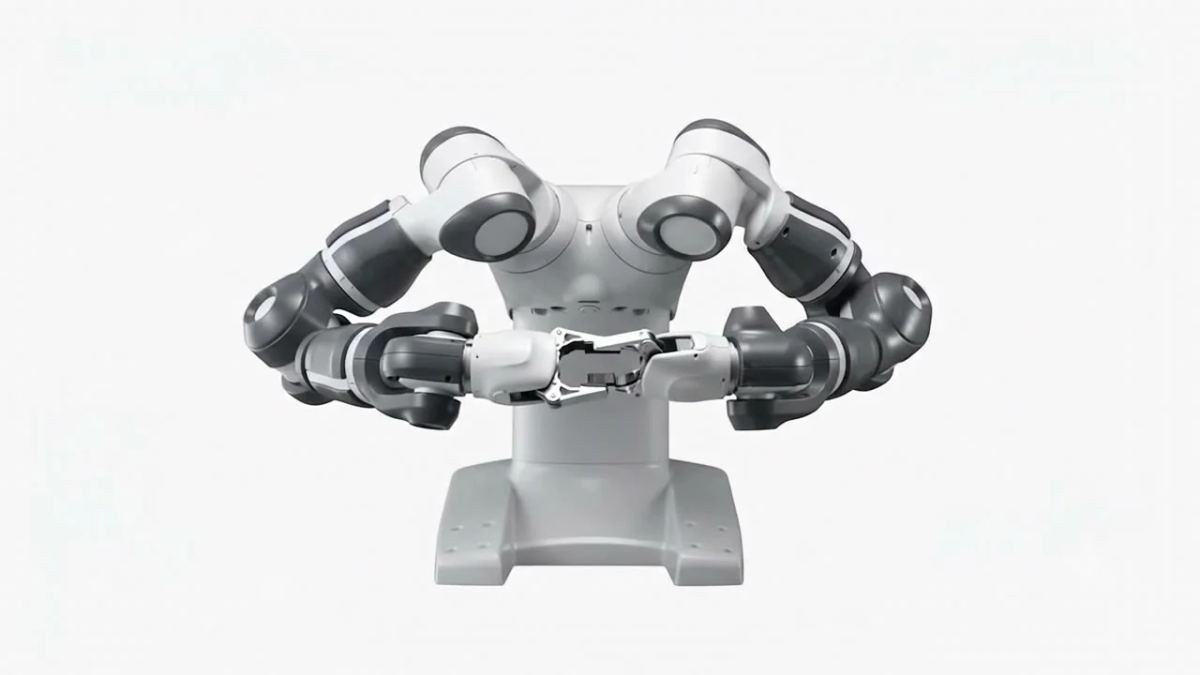
Dual-arm collaborative robot holding a part with both arms
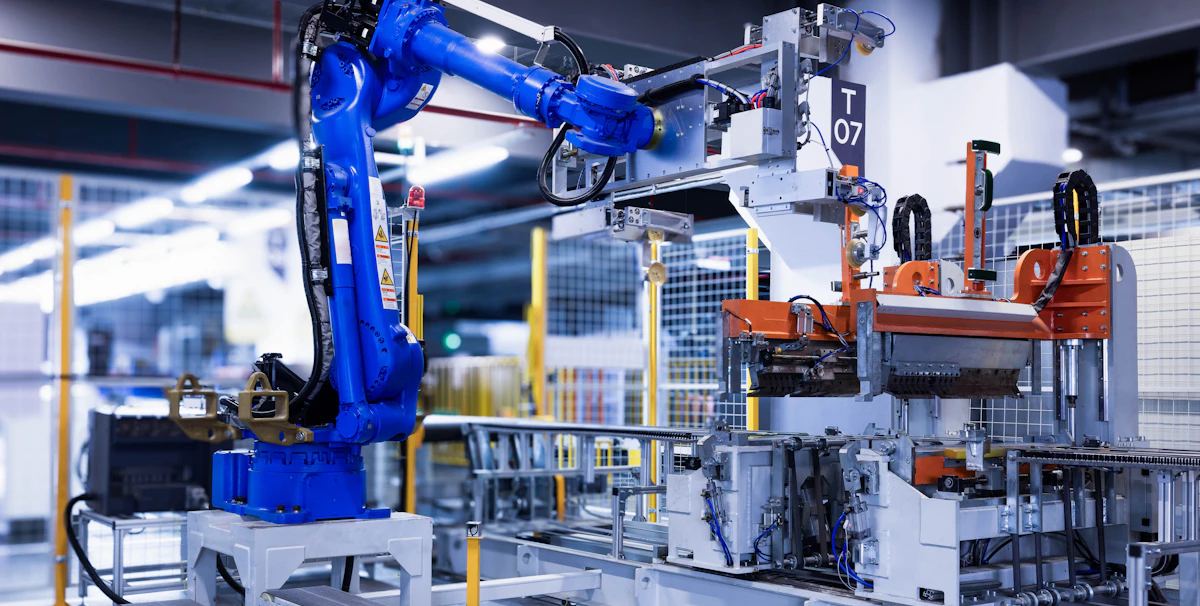
Collaborative robotic arm working in an automated facility

Shared workspace

Built to share the workspace, not replace it

Where a full-scale industrial arm needs a cage and a clear floor, a cobot works beside your team, sensing contact, limiting force and stopping the instant something is not where the plan expected.

  • Force-limited by design. Safety-rated joints sense contact and stop short, so the arm can share a bench with a person without a cage between them.
  • Tool-agnostic mounts. Quick changeovers between grippers, glue heads and vision-guided pick tooling keep one arm working across several jobs a shift.
  • Supervised, not standalone. Every cobot reports into the same Joint Inspection Center as the rest of the fleet: one dashboard, not a separate system to babysit.
  • Force-limited joints
  • Tool-agnostic mounts
  • JIC-supervised

On the line

Where cobots earn their place

The same arm, three different tools, deployed on the tasks that reward precision and repeatability over raw payload.

  • Assembly

    Precision joining of components at line speed, with force feedback that catches a misalignment before it becomes a defect.

  • Gluing

    Advanced motion algorithms lay clean, consistent beads: the same result on the first unit of the shift and the last.

  • Bin picking

    Vision sensors find and grip parts from unsorted bins, guided by the AI vision system.

The lineup

Every arm, one control layer

From a single bench-mounted arm to a coordinated cluster, every cobot runs on the same safety logic and reports into the same dashboard.

A single-arm collaborative robot at a workstation

One station

Single-arm cobot

A compact, bench-mounted arm for one station, one task and one operator working right beside it. Sized to slot into an existing line without moving a wall or pouring new footings.

  • Payload 5–10 kg
  • Reach ~900 mm
  • Single-station mount
Robot arms working together in a production cell

Shared cell

Modular cobot cluster

Several arms share one cell, each running its own tool and job, coordinated so their work envelopes never collide. For cells that need more than one pair of hands but no more floor space.

  • Multi-arm coordination
  • Shared cell layout
  • Zero-collision paths
A dual-arm collaborative robot

Two hands

Dual-arm cobot

Two arms on one base working a single part together: one holds while the other joins, glues or fastens. For jobs that need two hands and only have room for one machine.

  • Payload 2 × 3–6 kg
  • Synchronised motion
  • Single-base footprint

Published specifications for a typical configuration. Final figures depend on the configuration and site; we confirm them during scoping.

Joint Inspection Center

Supervised from one dashboard.

Every cobot reports cycle status and faults into the Joint Inspection Center, so line supervisors see the cell alongside the rest of the site.

See the digital twin
  • Digital twin synthesisA real-time 3D view of the plant, not just a camera feed.
  • Mission orchestrationRehearse in the twin, then dispatch the real fleet.
  • Smart Edge AlarmsFaults, corrosion and gas escalated to a person.

Book a live demo

Put a cobot on your bench

Tell us the task and the tolerance, and we will show you what a shift looks like with a cobot on the line.